THE BIKE TUBE: ORIGINS, DESIGN, MATERIALS, AND DEVELOPMENT

The butyl rubber inner tube inside a tire ensured consistent air pressure for many decades and, thanks to its elasticity, was a major contributor to the high level of riding comfort in the tires of trekking, city, mountain, and even road bikes — until now. Is the butyl tube's monopoly coming to an end? First, let's take a step back.
In the late 1880’s, inventors and pioneers John Dunlop and Édouard Michelin revolutionized the wheel. Dunlop constructed the first air-filled rubber tire around his son’s tricycle rim. Michelin took a giant leap toward themodern everyday tire by inventing a replaceable tire with an inner tube. About 50 years earlier, Charles Goodyear had laid the groundwork for both of them with his vulcanization process — because only rubber processedwith sulfur, heat, and pressure has the flexible, elastic properties that still provide us, to this day, with riding comfort and grip on the bike. In essence, the state of the art was nearly reached at the start of the 20th century — the same technology that still spins on and inside millions, if not billions, of bikes worldwide. But both the classic butyl rubber inner tube and its lightweight counterpart, the latex tube, have been increasingly displacedover the past few years. Bike tubes made from the plastic TPU, as well as tubeless systems, are currently conquering rims around the globe, especially on performance-oriented bike types.

Bike tubes from AERON/TPU
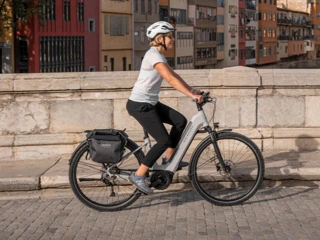
City/Tour – UltraProtect
Outstanding puncture protection for touring and daily commuting. Low weight and reduced rolling resistance increase the fun factor on every ride.

CX/Gravel – ExtraLite Protect
Perfectly tuned for athletic use beyond paved roads – lightweight, puncture-resistant, low rolling resistance, and compact packing size.

MTB – SuperLite Race AL
For mountain bike racers: ultra-light with extra-low rolling resistance. Its extremely compact packing size also makes it the perfect spare inner tube for tubeless riders.

Road – ExtraLite Protect AL
The Road ExtraLite Protect with aluminum valve stem is perfectly tuned for performance road biking – lightweight, puncture-resistant, low rolling resistance, and compact packing size.

Why Are There Tubes Inside Bicycle Tires at All?
Cars don't use separate inner tubes in their wheels — so why do bicycles? With standard rim-and-tire combinations on a bike, the interface between the two components isn't precise enough to create an airtight seal underpressure. On cars and trucks, the contact points are shaped accordingly. Car tires are generally more elaborately and robustly constructed — their thick carcass and rubber layer hold air very well. Air can diffuse through a bicycle tire, albeit very slowly. Bike tires are optimized for weight and cost, and the inner tube helps seal small gaps between the tire and rim while generally acting as an air barrier. Additionally, the significantly thickercar tires are less prone to flats. For cyclists, a quickly installed spare tube in a jersey pocket makes roadside repairs much easier. Without a tube, you'd also theoretically have to pump up your tires before every ride for thereasons mentioned above. Air retention varies considerably depending on the material — the latex tube, in particular, continuously lets air escape through its structure, even when undamaged.

For off-road bikes, where a tire's high flexibility is directly linked to grip, tubeless systems are also gaining traction. These are filled with a liquid based on latex or synthetic alternatives, and the rim and tire are speciallymatched in shape so they seal even without an inner tube. Tubeless tires work quite well, especially with wide tire widths and low tire pressure, though the maintenance effort is considerably greater than with traditional tube / tire setups.
How Good Are Bike Tubes Made from Plastic TPU Instead of Butyl or Latex?
Alongside the tubeless trend, the tubes themselves have undergone a significant development leap. The roughly 150-year era of vulcanized rubber may soon be over. Thermoplastic polyurethane — or TPU for short — exhibits material properties that are consistently superior to butyl rubber in terms of flat protection, rolling resistance, weight, and deformability. The only downside is that processing is more complex, making the tubessomewhat more expensive. Even when made very thin, TPU retains air better than butyl and far better than latex. The material stretches considerably before cracking. The fact that — unlike rubber — it doesn't elasticallyreturn to its original shape after stretching is irrelevant for a bike tube, since the dimensionally stable tire limits the expansion. When sharp objects pierce the tire, this high stretchability also means that a foreign body ismore likely to deform the material inward rather than cut through it — at least within certain limits and more so than with classic butyl. On average, it takes more force to puncture a TPU tube. The result is bike tubesavailable in virtually every tire width and size that are significantly lighter despite better riding characteristics, more durable, and take up far less space as a spare. Tubeless systems are comparable in individual qualities, and marginally ahead in rolling resistance, but the handling is disproportionately more complicated, with more demanding installation and maintenance.

Which Tube Is Right for My Cycling Discipline, and What Should I Look for When Buying?
Unlike butyl tubes, TPU tubes come in more options with regard to flat protection, rolling resistance, and weight — effectively putting them at the top of the market across all disciplines and bike types. This range ofmodel variants is especially advantageous when specific qualities are particularly important, such as weight on a high-end road bike. The lighest TPU tubes are roughly four times lighter than name-brand butyl models. And even at maximum material thickness for optimal flat protection, TPU variants are still lighter and produce less rolling resistance than comparable safety models made of rubber. That's the end of the spectrum mostrelevant to owners of touring, trekking, and city bikes. The thin, pliable material makes the tire sidewall only marginally stiffer.

By contrast, deforming a tire carcass plus a butyl tube requires more energy — what's knownas flex work. This greater overall flexibility of the tire sidewall and tube benefits ground contact most on gravel, cyclocross, or mountain bikes. The more compliant combination with the TPU tube has a larger contactpatch with the ground, providing more grip. This effect, particularly well-known among cyclocross riders, is less noticeable in off-road terrain than tread pattern or tire pressure, but at the limit, such a nuance can make all the difference.
Choosing the right model therefore has less to do with cycling discipline and more to do with the individual rider's preferences. Since TPU tubes, even when optimized for a specific property, perform no worse thanconventional butyl tubes in all other respects, there is a strong case for going with this new tube technology.

How Do I Find the Right Tube for My Bike?
You'll find your tire's dimensions on its sidewall. The tube must match those dimensions. Unfortunately, the industry has yet to agree on a standardized measurement method or unit, which is why tire size is usually printed three times — in different values. To avoid confusion, pick one system and stick with it: You can use inch sizing, which starts with the overall diameter of the tire — or, its height — ranging from 12" to 29". The secondnumber in a designation like 28 x 1.5" describes the tire's cross-section, or its width. The same measurements in millimeters are referred to as French nomenclature. On a road bike, this might be 700 x 23C. Both systemswork with the outer circumferences of the tires, allowing conclusions about the rolling circumference. For tubes, this is the most practical approach.
The ETRTO system, which specifies the outer diameter of the rim and the tire's cross-section in millimeters, does not do this — but it is more precise when it comes to fit on the rim. The format consists of a three-digit number between 203mm (for 12-inch rims) and 622mm (for 28-inch rims)*, paired with a two-digit number between 18mm (old road bike width) and 75mm**, separated by a hyphen or an "x". For more on finding theright tube size, see here. For tires, the ETRTO system is the most accurate.

On a tube's packaging, the compatible tire cross-sections (seen from above) and, less commonly, the overall circumference (seen from the side) are listed as a range. Because of its stretchability, a tube can adapt to multiple sizes. When purchasing, you should stay within that range. For a typical gravel tire with a 44mm width, for example, the packaging might read: 622 x 32–52. If a tube develops folds inside the tire or has to stretch toomuch, the risk of a flat increases significantly. This applies equally to butyl, TPU, and latex.
Tube replacement works nearly identically with all three materials, by the way. All materials can also be repaired. However, both the patch material and the adhesive used must be specifically compatible with the tubematerial — otherwise the patches won't hold.

There are currently four valve types in use, of which the new Schwalbe Clik Valve is still rarely found and the classic Dunlop valve (DV) is virtually no longer used. The market is mainly split between the Schrader valve(AV), also known as the auto valve, and the Sclaverand valve (SV), also known as the Presta or French racing valve. They can be identified by their shape and construction: The Schrader has a wide, uniform stem with thevalve core completely hidden inside. The Presta, by contrast, is quite narrow — which is why the two types also require different-sized rim drill holes. They are not interchangeable. Additionally, the Presta's valve core sitsvisibly at the tip and can be locked in place via a threaded collar on the stem. More on the Presta valve and how to use it correctly here.
In addition to valve type, valve length also varies. Standard valves are 40 or 42 millimeters long and fit the vast majority of rims. Only tall, aerodynamic rims (viewed from the side) might require longer valves of up to 80 millimeters or occasionally longer. The goal is to choose a length that leaves enough of the stem protruding from the rim for the pump head to attach securely. On the other hand, an excessively long valve stem creates an unnecessary lever that can promote bending or breaking of the valve when pumping. More information on valve length can be found here.

When it comes to price ranges and manufacturers, experience shows that brand-name products pay off over time. Products of unknown origin may be significantly cheaper, and their often shorter lifespan may be easy tojustify — but when you factor in the hassle of repairs and the inconvenience of a breakdown on the road, high-quality products offer better value and performance in the long run. The same applies to the choice betweenbutyl and TPU: the greater investment in a product of known origin with a corresponding commitment to quality is well worth it.
*As of late 2025, some mountain bikes with 32-inch wheels are beginning to come to market. This will expand the possible range of rim diameters to over 700 millimeters.
** Very rarely also up to 100 (fat bike width)
Product Series
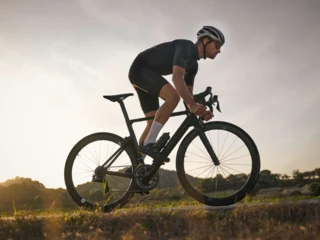
ROAD SERIES
Ultra-light, super-fast and mega-compact: AERON/TPU road bike tubes are trimmed for maximum performance. Depending on the discipline and intended use, they guarantee you the perfect set-up with a focus on maximum weight saving and minimum rolling resistance or outstanding puncture protection.
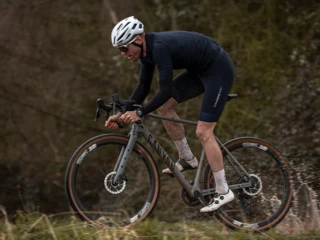
CX/GRAVEL SERIES
TPU technology, perfectly designed for off-road use: Lightweight, puncture-proof, low rolling resistance and the smallest pack size. AERON/TPU offers high-performance tubes for gravel and cyclocross racers as well as variants with maximum puncture protection for bikepackers and ultra-riders.
MTB SERIES
Tech for trails: AERON/TPU provides the perfect tube technology for mountain bikers with the best compromise between lightness, puncture resistance and low rolling resistance. Specific models offer you the perfect tube for your favourite mountain bike discipline, depending on your preferred terrain or riding style.

CITY/TOUR SERIES
Developed for bikers who want maximum reliability in everyday use. AERON/TPU tubes for city and touring are characterised by optimised puncture protection. Their low weight and low rolling resistance also increase performance and the fun factor on every tour.