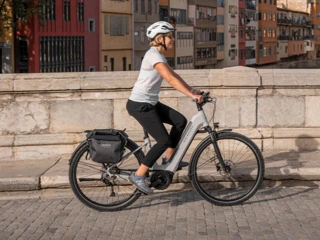
A LIGHTWEIGHT INNER TUBE MAKES YOUR BIKE FASTER AND MORE AGILE — WHEN IT FITS
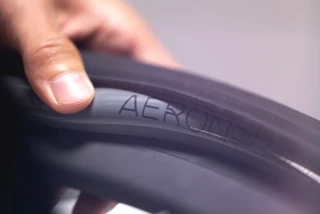
When it comes to inner tube, puncture protection, rolling resistance, and price, it all matters — and it should be lightweight, too. But how important is weight in such a small component? That depends on the bike type and intended use. On a mountain bike (MTB) with wide tires, an ultra-light tube is probably less effective than on a gravel or road bike. However, mountain bikes, city bikes, and trekking bikes benefit from modern tubes in other ways — more on that below.
Lightweight tubes from AERON/TPU
MTB – SuperLite Race AL
For mountain bike racers: ultra-light with extra-low rolling resistance. Its extremely compact packing size also makes it the perfect spare inner tube for tubeless riders.

Advantages of Lightweight Inner Tubes vs. Heavy Ones
An inner tube — or rather its weight — affects the riding performance of a bike and its individual wheels in two ways. First, every bike tube naturally adds to the overall mass of the bike. With classic butyl models, that's between 80 and 200 grams depending on size. Latex tubes are on average somewhat lighter; with tubeless systems that have no tube at all, you must account for the heavier threaded valve and the necessary sealant — which together add up to 80 to 140 grams per tire depending on the amount used. The lightest bike tubes currently available are made from plastic TPU (thermoplastic polyurethane) and weigh as little as 20 to 90 gramsincluding their Presta valve. These partial weights relative to the total system weight — consisting of the bike, rider, and gear — are very small at around 0.015% overall and make virtually no difference in terms ofacceleration or effort on climbs.
However, since the tube and valve sit far out in the wheel between the rim and tire, they rotate very quickly while riding and must be set in motion with each pedal rotation and acceleration. This is where rotational inertiahas a noticeably stronger effect.
Beyond the extra force needed to accelerate heavy inner tubes with heavy valves along this circular path, you can actually feel the weight of the tube even in the way a bike handles. A heavy valve can also cause rotationalimbalance. Due to gyroscopic forces, a spinning wheel resists any change in direction or lean. Steering and leaning into corners is also easier with lighter tubes — though not dramatically so.
AERON/TPU VS. BUTYL
| Category | Weight Advantage (%) | Low rolling resistance (%) | Puncture protection (%) | Air retention (%) |
|---|---|---|---|---|
| Butyl | 17 | 80 | 49 | 83 |
| SuperLite Race | 100 | 100 | 50 | 88 |
| ExtraLite Protect | 65 | 97 | 61 | 91 |
| UltraProtect | 31 | 77 | 100 | 100 |
Does a Lower Rolling Resistance Occur Automatically With Lighter Tubes?
Rolling resistance is less related to the weight of the tube than its elasticity, or more precisely, its flexibility. As the tire rolls, it deforms together with the tube against the riding surface and over obstacles. This flex costsenergy; the lower the tire pressure and the smaller the contact patch, the greater the energy loss.
Rolling resistance can accordingly be reduced — beyond using a smoother tread — by increasing tire pressure and using a more flexible tire / tube combination. Tubeless tires lead slightly in terms of efficiency, followedby TPU and latex tubes at a similar level. Butyl is simply too thick-walled to achieve genuinely low rolling resistances. So low rolling resistance isn't caused by the weight of the tube — but the two properties generally gohand in hand and tend to appear together, because especially light tubes are typically very flexible due to their thin material.
Thermoplastic polyurethane (TPU) offers the best compromise. The energy required for deformation — or flex, in technical terms — is low, even at low tire pressure. Unlike butyl or latex tubes, TPU also offers good tovery good puncture protection, both against sharp objects piercing through and against the dreaded pinch flat, which occurs when low tire pressure and a rolled-over obstacle cause the tire and rim to forcefully contact eachother. This durability at low tire pressure doesn't quite match the flat protection of tubeless setups — but the handling, installation and maintenance, is far simpler.

Advantages of Lightweight Bike Inner Tubes Over Tubeless
To take full advantage of a tubeless system’s flat protection and good low-pressure performance, a fair amount of know-how and fairly involved maintenance are required. This generally makes more sense in competitivecycling, and most of all in MTB or gravel riding. Filling the tires with sealant and initially inflating them with high-pressure booster pumps often presents challenges for beginners. Out on the road, it then comes down tohow large the damage is when a flat occurs. Small holes are sealed by the sealant on its own; medium-sized ones require the not-so-easy insertion of tire plug material into the opening; and in the worst case, continuing theride is no longer possible. More on the topic of tubeless vs. TPU here.
With TPU, you get a similarly lightweight product inside the tire as you would with the sealant and threaded Presta valve of a tubeless setup — and you still have a spare tube with a minimal packed size that fits in yourjersey or bike bag. Swapping a TPU tube is just as straightforward as it is with butyl. In comparison, the advantages of lightweight bike tubes over tubeless tires are clear, not to mention you don't need to buy any extraslike valves, sealant, tire plugs, or special tools from the bike shop.
What Should I Look for When Buying a Lightweight Bike Tube?
Since there's no longer any argument for using a latex tube in the age of TPU, when we talk about light and ultra-light bike tubes today, we're essentially talking exclusively about thermoplastic variants. Unlike butyl tubes, these come in a wide range of wall thicknesses and with varying numbers of layers. This gives cyclists the choice between a super-light tube with slightly less puncture protection and a light tube with very high flat resistance. To avoid selecting the wrong size when buying, you should focus on just one of the three numerical codes printed on the tire. We recommend the ETRTO standard, which uses millimeter values rather than inchmeasurements. The format consists of a three-digit number between 203 mm (for 12-inch rims) and 622 mm (for 28-inch rims)*, paired with a two-digit number between 18 mm (old road bike tire width) and 75 mm — veryrarely up to 100 mm (fat bike tire width) — connected by a hyphen. Due to the thin wall material, the range of tire diameters a TPU tube can fit is somewhat narrower than for rubber tubes. More on finding the right tubesize here.
Do Lightweight Tubes Also Have Special Valves?
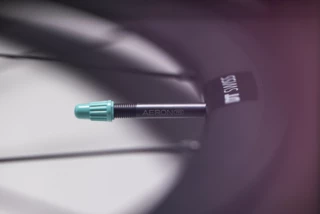
In addition to dimensions, valve length and valve type should also match the rim. The outdated Dunlop valve can be disregarded when it comes to this modern generation of lightweight plastic tubes. In most cases, you'rechoosing between the wide, uniform stem of the Schrader valve (also called the auto valve, or AV) and the narrower Presta valve (also known as the Sclaverand valve, or SV), with its characteristic knurled nut at the valvetip. AERON/TPU offers not only a plastic valve with a bonded valve core, but also a premium and more durable aluminum version. The removable core not only makes it easier to install valve extenders — the sturdy stemand external thread also make attaching the pump head and inflating the tire much easier.
When it comes to valve length, the basic rule applies: the valve should protrude just far enough from the rim that the pump head can be securely attached. Valves that are too long create an unnecessary lever that can cause the valve to bend or snap when pumping.
Who Are Lightweight Bike Tubes Right For?
The main advantage of particularly light tubes lies in their energy savings — both when accelerating the wheels and during steering movements. Less rotating mass makes every wheel more agile, depending on speed and distance from the pivot point. The lighter the other components, the more significant the weight savings from the inner tube become. The benefit of lighter tubes also increases with frequent acceleration and braking duringa ride, because the small energy savings add up. The greatest beneficiaries are lightweight performance bikes that are also ridden quickly. On road bikes, it's mainly the weight advantage that counts; on gravel and mountain bikes, the deformability characteristics mentioned above — in the context of rolling resistance — play a somewhat larger role. All bike types benefit from more agile handling through reduced rotating mass in therear — and even more effectively in the front wheel. Riders who are primarily after TPU's excellent flat protection should skip the ultra-lightweight builds and opt for models with greater puncture resistance — which arestill generally considerably lighter than their butyl counterparts. More on the material question: Butyl vs. TPU here.
*As of late 2025, some mountain bikes with 32-inch wheels are beginning to come to market. This will expand the possible range of rim diameters to over 700 millimeters.
Product Series
ROAD SERIES
Ultra-light, super-fast and mega-compact: AERON/TPU road bike tubes are trimmed for maximum performance. Depending on the discipline and intended use, they guarantee you the perfect set-up with a focus on maximum weight saving and minimum rolling resistance or outstanding puncture protection.
CX/GRAVEL SERIES
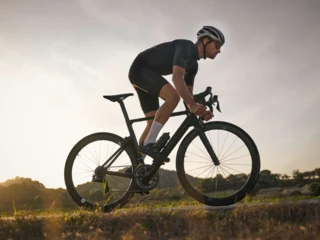
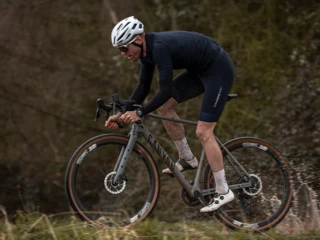
TPU technology, perfectly designed for off-road use: Lightweight, puncture-proof, low rolling resistance and the smallest pack size. AERON/TPU offers high-performance tubes for gravel and cyclocross racers as well as variants with maximum puncture protection for bikepackers and ultra-riders.
MTB SERIES
Tech for trails: AERON/TPU provides the perfect tube technology for mountain bikers with the best compromise between lightness, puncture resistance and low rolling resistance. Specific models offer you the perfect tube for your favourite mountain bike discipline, depending on your preferred terrain or riding style.

CITY/TOUR SERIES
Developed for bikers who want maximum reliability in everyday use. AERON/TPU tubes for city and touring are characterised by optimised puncture protection. Their low weight and low rolling resistance also increase performance and the fun factor on every tour.