Veröffentlicht am
THE BEST CITY BIKE TIRE PRESSURE – WHAT TRULY MATTERS!
The right tire pressure for your city bike: What's the optimal air pressure for my city bike? Find all the relevant factors here!

Tire pressure on a city bike is one of the most debated — and most misunderstood — topics in urban cycling. It influences nearly every important factor: rolling resistance, flat tire prevention, comfort, handling, and even the lifespan of your tires, rims, and inner tubes. Anyone who relies on their city bike for daily transportation shouldn't settle for a one-size-fits-all pressure or ignore it altogether. Instead, it should be set intentionally — because beyond the tire itself, choosing the right inner tube also significantly affects how well that pressure stays consistent day to day.
Reading and Properly Setting Tire Pressure
The tire sidewall provides key information, including the tire size and the recommended air pressure in PSI or bar.
Manufacturers usually print a pressure range from minimum to maximum on the tire. Remember that the front and rear wheels carry different loads. About two-thirds of the total weight rests on the rear wheel, with slightly more on city bikes and Dutch-style bikes. Increasing the rear pressure by 0.3 to 0.5 bar is generally enough to balance this out. You can find more tips on selecting the right tire and tube size and how to read ETRTO specifications on the sidewall in our magazine.

Reference Values for Different Bike Types
Here are general guidelines for optimal tire pressure for different types of bikes.
Bike Type | Tire Width | Tire Pressure (bar) |
| Narrow city/trekking bike | 37–50 mm | 4.5 |
| Modern urban bike / balloon tire bike | 50–65 mm | 3.0 |
These values apply at a rider weight of approximately 155 lbs (70 kg) with a bike weighing around 50–55 lbs (23–25 kg). As a general rule: for every additional 22 lbs (10 kg) of total system weight (rider + cargo), increase pressure by approximately 0.2 to 0.3 bar. For city e-bikes, add an extra 0.2 to 0.5 bar due to the higher weight of the motor and battery, depending on tire width.
Why the Inner Tube Is What Enables Optimal Tire Pressure
Getting the tire pressure right isn't very helpful if the inner tube undermines those benefits. Classic butyl tubes have proven their worth over decades, but they have clear drawbacks for city riding: heavier weight, more air loss, and less effective flat protection from punctures caused by broken glass or nails.
This is where AERON/TPU bicycle inner tubes come into play. TPU — thermoplastic polyurethane — blends the flexibility of rubber with the dimensional stability and durability of modern plastics. The result is a tube that's not only significantly lighter but also performs consistently across different pressure levels. This benefit is especially evident in city traffic, where air pressure can vary slightly due to weather, load, and road conditions.
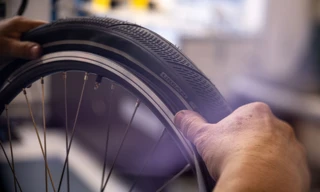
AERON/TPU tubes offer:
- Lower rolling resistance because the tube conforms more evenly to the tire and needs less flex energy.
- Less air loss, ensuring longer-lasting pressure stability
- Greater resistance to impact punctures on curbs and edges.
- A very compact pack size — perfect as a spare tube for commuters.
- High-dimensional stability, even at higher city bike pressures

CITY BIKE TUBES FROM AERON/TPU
City/Tour – UltraProtect
Outstanding puncture protection for touring and daily commuting. Low weight and reduced rolling resistance increase the fun factor on every ride.

Low Pressure Isn't Always the Best Choice
There's a common saying: "As much as necessary, as little as possible." The advice to ride with as little tire pressure as possible originally comes from competitive cycling, where modern lightweight tires with thin casings do indeed perform efficiently even well below recommended pressure. However, for many classic city bike tires, this doesn't apply without reservation. Some tires feature particularly thick sidewalls, with a rubber layer nearly a quarter inch (around 7 mm) thick for high flat protection — but that also means a very stiff casing. Running such a tire at too low a pressure greatly increases rolling resistance. The tire essentially rolls along the asphalt in a wobbly manner instead of rolling smoothly. Additionally, these tires tend to develop sidewall cracks and age prematurely when consistently run at low pressure. For this reason, heavy-duty puncture-resistant tires should always be inflated in the upper third of the manufacturer's recommended pressure range. Riders using a sportier city tire with a thinner casing can get away with less pressure — but along with increased comfort, they should expect some compromises in flat protection and tire lifespan.

Curbs, Road Debris, and Rim Protection in Urban Traffic
City bikes are used differently than sport bikes. Curbs, cobblestones, manhole covers, and sharp road debris are part of daily life. On older bikes with narrow rims and tires as slim as 1.5 inches (37 mm), too-low pressure quickly leads to pinch flats — so-called snakebites on the tube — or even rim damage. This is where a TPU tube proves its strength, as the material is much more resistant to these common pinching impacts than traditional butyl.
The bottom line: never go below a tire's minimum pressure. When frame and rim clearance permit, we suggest city bike tires of 40 mm (1.6 inches) or wider. Flat protection greatly improves, while rolling resistance is barely affected — ideal especially for frequent riders and commuters.

Checking Tire Pressure in Everyday Use
Whether your city bike's tire pressure is set correctly can often be noticed right at the start of a ride. Too little pressure results in mushy handling and increased pedaling effort, sometimes causing sluggish steering or a wallowing feeling. Too much pressure becomes apparent through harsh feedback, bouncing, and less comfort. A floor pump with a pressure gauge or a separate tire pressure gauge remains the most reliable method. Pressure should also be adjusted when riding with heavy cargo for long periods or in winter on slippery roads.

Conclusion: Ride Smart, Don't Just Pump Blindly
The optimal tire pressure for a city bike isn't a fixed number that works for everyone — it depends on tire construction, tire width, rider and system weight, road surface conditions, and how the bike is used. Riders who consider these factors and use a high-quality inner tube will ride more efficiently, more safely, and with gear that lasts longer.
That's how tire pressure on a city bike becomes something you can actually control — and the inner tube stops being just a supporting part and becomes a crucial technical component.
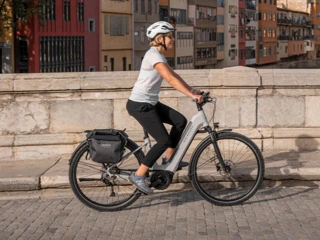
Product Series
ROAD SERIES
Ultra-light, super-fast and mega-compact: AERON/TPU road bike tubes are trimmed for maximum performance. Depending on the discipline and intended use, they guarantee you the perfect set-up with a focus on maximum weight saving and minimum rolling resistance or outstanding puncture protection.
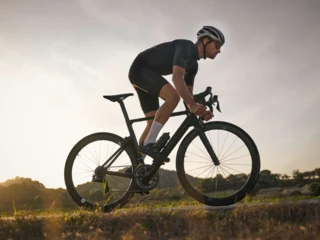
CX/GRAVEL SERIES
TPU technology, perfectly designed for off-road use: Lightweight, puncture-proof, low rolling resistance and the smallest pack size. AERON/TPU offers high-performance tubes for gravel and cyclocross racers as well as variants with maximum puncture protection for bikepackers and ultra-riders.
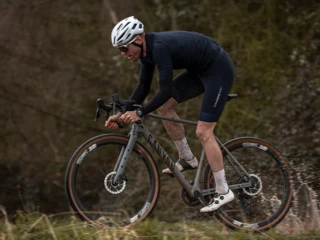
MTB SERIES
Tech for trails: AERON/TPU provides the perfect tube technology for mountain bikers with the best compromise between lightness, puncture resistance and low rolling resistance. Specific models offer you the perfect tube for your favourite mountain bike discipline, depending on your preferred terrain or riding style.

CITY/TOUR SERIES
Developed for bikers who want maximum reliability in everyday use. AERON/TPU tubes for city and touring are characterised by optimised puncture protection. Their low weight and low rolling resistance also increase performance and the fun factor on every tour.