Veröffentlicht am
TPU FIELD TEST ON A MONUMENTAL COURSE
Only field tests can determine whether the properties verified in the lab can be truly achieved in real-world conditions. The AERON/TPU development team aimed to test the durability of their latest, ultra-light TPU tubes in a real endurance scenario. They sent their tubes to the Hell of the North, crossing the cobblestones of the iconic spring classic in Roubaix.

When the automotive industry develops and tests new models, it does so at the Nürburgring, under the blazing desert sun, on asphalt ovals with steep curves, or even beyond the Arctic Circle. They push far beyond normal or everyday stresses to simulate the product’s entire lifecycle in a much shorter period. Additionally, testing in extreme conditions adds a safety margin—as a quality assurance measure. What can handle the extremes won't fail under normal use.
The team testing the new AERON/TPU tube has already been to the Nürburgring Nordschleife, but for a road bike tube, the stresses on the smooth asphalt of the racetrack are generally moderate to manageable. While the prototypes demonstrated the excellent rolling characteristics of such a modern bicycle tube made of thermoplastic polyurethane, they were unable to show their significant resistance to tearing, crushing, or bursting.
Track testing or roller dynamometer
By that time, the first AERON/TPU tubes had been in use on our in-house test benches for about six months. Result: With each development phase, these lightweight tubes showed increasingly strong resistance to punctures and crushing in the tire. In some cases, the tools required four times more force per square millimeter to cause basic damage, using the performance metrics of classic butyl tubes as a reference.

More Insights into TPU Tubes
The results promised a paradigm shift in the bicycle industry, but what looks good on paper and with standardized tools can expose weaknesses in real-world tests that hadn’t been seen in lab conditions. That’s when one of the employees thought of using the automotive industry as a model and pushing practical testing to the limit. The famous professional bike race from Paris to Roubaix in northern France just flashed across the TV screen. The racecourse, known among cyclists as the “Hell of the North,” covers about 200 kilometers of country roads and paved farm roads, plus roughly 55 kilometers of historic cobblestones.
For professional teams, their riders and mechanics, the race in early April always brings significant stress. On one hand, the race bikes need a setup suitable for cobblestones; on the other hand, the support crew faces a constant flow of breakdowns on race day.

Road Tubes from AERON/TPU
Road – ExtraLite Protect AL
The Road ExtraLite Protect with aluminum valve stem is perfectly tuned for performance road biking – lightweight, puncture-resistant, low rolling resistance, and compact packing size.

Road – ExtraLite Protect
For performance road cyclists: fast, light, puncture-resistant, with low rolling resistance, sporting a compact packing size.

A calculated Risk at 25 Millimeters
For professional teams, their riders, and mechanics, the race in early April always means immense stress. Often, completely new race bikes are built because the aero bikes don’t offer enough space for the extra-wide tires. In addition, the weight distribution between the front and rear wheels on a less aggressively designed frame geometry better suits the riding technique, which at least gives you a chance to make it through the cobblestone sections—known as “pavés”—unscathed and without whiplash.

As the person chosen to conduct the field test, I unfortunately don’t have a fleet of bikes that would allow me to quickly switch between different models depending on the route. My race bike is exactly that kind of speed-optimized machine with 25-millimeter-wide tires, equipped with two AERON/TPU ExtraLite Protect tires and three more as spares—the TV broadcasts showed a seemingly endless stream of pros on top-of-the-line equipment frantically calling for their service cars. And so far, there has been no public test of modern TPU technology on this ultra-tough course. So this wasn’t skepticism about the product, but a calculated risk.

From Tester to Passenger
Despite a less-than-promising start, motivation and morale were at an all-time high—until I, as the test rider, saw the condition of this legendary cobblestone surface firsthand: rough, bumpy, and dirty. According to reports, once a certain minimum speed is reached, the individual cobblestones should blend into a smooth, even surface. And following that logic, a cautious—i.e., slow—approach to the cobblestones wouldn’t make the ride any easier. The conclusion: eyes closed and just go for it.
The roughly 30 sections of cobblestones in the UCI professional race aren’t all equally difficult. Length, and especially the roughness and condition of the surface, categorize them from one to five stars, with the three 5-star sections often serving as the race’s main challenges. And it’s precisely at one of these that my bike and I are standing right now—less euphoric and optimistic than before.

Sector 22: Quérénaing to Maing
This farm road through northern France's fields, despite its lush two-and-a-half-kilometer stretch, has only received a three-star rating. It seems like a doable route for “first attempts,” but in reality, it looks like a path that should have been closed off. Numerous carts and tractors have rutted the surface. The road is heavily arched; you naturally drift outward on the slopes, so even in dry conditions, you scarcely have control over your line. As far as I can see, I therefore plan my route before making first contact. Only on the third attempt do I release the brake levers and use momentum to roll onto the 19th-century road. Already, the fourth or fifth row of cobblestones delivers a harsh blow to my front rim. I had adjusted the tire pressure to a relatively absurd 2.8 bar. Was that too low? Because the metallic clang as the rim hits the ground had a deadly ring to it. With even less cushioning in the tires, however, I would have felt that the handlebars’ own momentum had overwhelmed my hand strength.
Four earth-shattering punctures up front and two in the rear later, the first sector is finished. I have to pause briefly to loosen my cramped hands and relax my neck. Ready to replace both flattened tubes immediately, my bike responds to a quick push from above with a decent bounce—the tires still hold air, and that after this ordeal!

The Learning Curve Toward Roubaix
Sector 22 was the first; others with three stars followed, then four, and then comes the Forest of Arenberg—a stretch of the course so daunting that even outsiders to the cycling world know exactly what it means for both rider and bike. More as an afterthought, I briefly press the valve stem of both tubes twice, under the illusion that this minimal pressure adjustment will make everything better. The top teams can rely on charts and experience here; I can only rely on rough guidelines from cyclocross.
I’m genuinely afraid of Arenberg! However, cyclocross might have been the right kind of inspiration. For example, on sand, there’s a riding technique where you shift your weight far back to take pressure off the handlebars. To prevent the rear of the bike from literally throwing me out of the saddle, I shift into a high gear before Sector 21—counting backwards—since putting more weight on the pedals means less on the saddle. The first few meters on #21 Maing to Monchaux-sur-Écaillon are relatively flat and give me an opportunity to try out the rear-weighted position. For a moment, I feel completely satisfied, then I overlook a huge, slanted rock, and suddenly both wheels press one after the other into its raised edge.

Waiting for a Breakdown
This bike race is completely crazy. The Austrian former pro Peter Wrolich once said: “If you crash just once or get a flat tire at Paris-Roubaix, you have a really good chance of finishing near the front.”
Now it’s clear why he said that. Time and again, I find myself in situations where I spot sections that are even worse than the rest of the course, but any bold steering maneuver would lead to a crash. Jumping over them might be possible, but the landing zone is also like a minefield. Often, the only option is to simply absorb the impact and cushion it with arms and legs. With even fewer options for evasion due to wet conditions, mud, and 200 competitors in the UCI race: purely mathematically, it’s hard to imagine that more than three riders will reach the velodrome in Roubaix.
Sector #20, four stars: Now the front and rear rims are almost bouncing in turn as I search for the best weight distribution. Sometimes the system nearly comes to a stop because I find just the right balance between the wheels; even my head and eyes are steady again. And the AERON/TPU tubes are still holding air.

Life in a tube at 2,300 meters
You improve, but you never fully get used to it. That’s one way to describe progress on the vibrating plate. There are moments with a flicker of control, but mostly you’re more passenger than pilot. Applied to the sector with the highest difficulty level exactly 200 meters ahead, it means: relinquish control, shift up, take your position, don’t slow down, and just let physics do its thing.
There’s a world of difference between 5-star and 4-star sections. Against the stones in the Arenberg Forest, my wheels feel like they’re from a 20-inch kids’ bike. Like tiny whirlpools in an already choppy sea, entire patches of irregularly placed, tilted, twisted, or simply missing stones stand out. Not only do the wheels take blows from below, but the cobblestones treat the tires like a punching bag. No machine in a lab could do that! And even worse: halfway through the 2,300 meters, gravity pulls me into the left-hand lane. There, hedgerows and thorns lurk, which I cannot avoid. You’re trapped in this lane, mainly because it’s constantly shady and cool in the forest, and the dew stays on the stones for a long time, making them slippery. Puddles have also eroded the joints here; it’s as if the path sometimes turns into a stone desert. This is truly a tire’s life in fast-forward—or rather, two or three. The forces alone that have acted on my AERON/TPU up to this point would not allow standard inner tubes to survive.

Simulation successful
It had been a long time since I’d felt that completely uncontrolled sensation in the saddle, like I do on cobblestones. I rode through nine more cobbled sections, and on the easier ones, I actually started to find a bit of a rhythm. But after the next 5-star sector, Mons-en-Pévèle, I’d had enough of field testing. Staying focused requires more energy than just pedaling.
I tried to keep count: my tires and tubes endured about 26 punctures in the front and roughly half that many in the back. Plus a few shards of glass, shrapnel, and thorn bushes. Test passed! My hands couldn't open a jam jar for two days, but I also passed the test—though a third of it was probably due to luck, chance, and, well, good equipment.

The route surpassed everything—everything I’d ever seen, heard, or read. When the pros, pro women, and amateur riders storm the pavés in April, I’ll be watching with admiration and 1,000 percent more respect! And I’ll be paying closer attention to see if maybe one or two flats could have been avoided with an AERON/TPU tube. Most riders will still start there with tubeless tires. According to research, these are also very puncture-resistant and lightweight, but notably less practical for everyday use because of installation and maintenance. In any case, the new TPU technology proved itself brilliantly in my test—and that on the toughest road bike course in the world!

Riding Tips for Roubaix: How to Handle Cobblestones
- Avoid using lightweight components whenever possible—especially handlebars and wheels.
- Select tires that are at least 30 millimeters wide, if possible.
- Install TPU tubes to prevent snakebites.
- Double-wrap the handlebar tape, use a special tape, or add cushioning pads underneath.
- Secure water bottles and pumps with extra Velcro or rubber bands, depending on the mount
- Cycle computer: Always secure with a safety strap!
- Adjust tire pressure to between 2.2 and 3.8 bar, depending on the tires and system weight
- Don’t begin with a 4- or 5-star section; instead, build up gradually.
- Shift into a higher gear – cadence approximately 60 rpm
- Shift your weight onto the pedals.
- Keep your elbows bent naturally and not too stiff.
- Look about three to four meters in front of the bike.
Product Series
ROAD SERIES
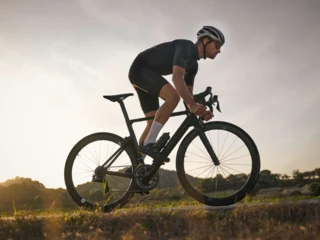
Ultra-light, super-fast and mega-compact: AERON/TPU road bike tubes are trimmed for maximum performance. Depending on the discipline and intended use, they guarantee you the perfect set-up with a focus on maximum weight saving and minimum rolling resistance or outstanding puncture protection.
CX/GRAVEL SERIES
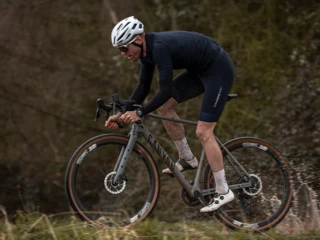
TPU technology, perfectly designed for off-road use: Lightweight, puncture-proof, low rolling resistance and the smallest pack size. AERON/TPU offers high-performance tubes for gravel and cyclocross racers as well as variants with maximum puncture protection for bikepackers and ultra-riders.
MTB SERIES
Tech for trails: AERON/TPU provides the perfect tube technology for mountain bikers with the best compromise between lightness, puncture resistance and low rolling resistance. Specific models offer you the perfect tube for your favourite mountain bike discipline, depending on your preferred terrain or riding style.

CITY/TOUR SERIES
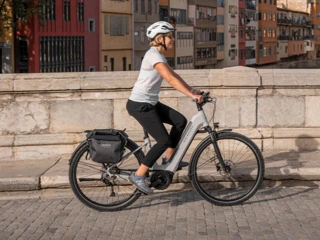
Developed for bikers who want maximum reliability in everyday use. AERON/TPU tubes for city and touring are characterised by optimised puncture protection. Their low weight and low rolling resistance also increase performance and the fun factor on every tour.