BIGGER IS BETTER – 29 INCHES IS THE GOLD STANDARD ON MOUNTAIN BIKES

Once a novelty at the turn of the millennium, 29-inch tires and tubes have firmly established themselves on the mountain bike. In endurance disciplines and those requiring high speeds, the large 29-inch wheels have even become the standard.
A bike, tire, or inner tube is referred to as a "29er" when it has an inner diameter of 622 millimeters and a tire cross-section of 50 millimeters or more. The very large rolling circumference and increased wheel radius (including the tire) that result from these dimensions significantly change the riding characteristics of a bike. Across most mountain bike disciplines, the 29-inch tire size delivers more advantages than drawbacks.
MTB tubes from AERON/TPU
MTB – SuperLite Race AL
For mountain bike racers: ultra-light with extra-low rolling resistance. Its extremely compact packing size also makes it the perfect spare inner tube for tubeless riders.

MTB – ExtraLite Protect
Tech for trails: the best balance between puncture protection, low weight, and minimal rolling resistance The ideal choice for mountain bikers. Lighter. Faster. More durable.

Advantages and Disadvantages of 29-Inch Tires and Tubes Compared
Well into the 2000s, MTBs were standardly equipped with smaller 26-inch wheels and tires, which gave the bike high maneuverability and a low center of gravity for off-road use. In moderate terrain, however, this isn't necessarily required. A mountain bike wheel with a larger circumference promises better rolling performance. The table below compares the respective pros and cons of the 29-inch size:

| Advantages of 29er vs. 26er | Disadvantages of 29er vs. 26er |
| Lower rolling resistance | More mass far from the pivot point |
| More ground clearance | Higher center of gravity on the bike |
| More contact patch / grip | Larger packed size for spare tube and tire |
| Easier rolling over obstacles | Longer wheelbase / less maneuverable bike |
| Wheel geometry suits taller riders better | Worse acceleration |
| Marginally better dampening | Wheel geometry suits shorter riders less well |
| More stable straight-line tracking | Less structurally rigid due to longer spokes |
Tire Logic: 29-Inch Tires Fit 28-Inch Rims
Something worth knowing when buying a 29-inch tire or tube: there are no rims that actually measure 29 inches. A tire or inner tube of this size fits a rim with a 28-inch diameter, or 622 millimeters outer diameter in the ETRTO system. You could also say that 29-inch tires and tubes are simply the extra-voluminous version of a 28-inch model.
The most likely reasons for splitting these into two separate tire size categories were, beyond better marketing as something new, the associated tubes and how they are sorted on store shelves. Tires and tubes wider than 50 millimeters are used almost exclusively on mountain bikes. To avoid mixing their products with those for road bikes, the extra-wide tires and tubes were given their own category. The one-inch larger diameter references the noticeably longer radius of the complete wheel including the wide tire — the "29 inches" does not come from a precise measurement. In the ETRTO system for tire size designations, 29-inch wheels continue to be labeled the same as 28-inch tires and tubes: 622 millimeters.
The 29-Inch Bicycle Tube
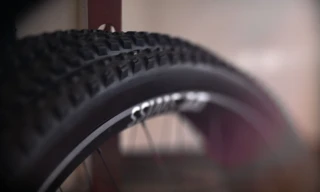
Tire casings from size 50 x 622 millimeters and up differ primarily in their tread pattern, weight, and puncture protection. These factors significantly influence the bike's riding characteristics. The same is true for tubes in the 29-inch size. Because they must expand to fit the large tire cross-sections, they very rarely fit tires narrower than 1.8 or 2.0 inches. A 28-inch bicycle tube, conversely, would have to stretch so much that its wall thickness — especially in the case of butyl rubber tubes — would become so thin that adequate flat protection could no longer be guaranteed, leading to frequent flats. So despite sharing the same rim diameter, you do need a dedicated tube for 29-inch tires — but which one?

Valve Types on 29-Inch MTBs
In the mountain bike sector, almost exclusively Presta valves (SV) are used, with Schrader valves (AV) being extremely rare — which simplifies the choice. Important: other valve types will not fit through the narrow rim hole designed for Presta valves. Valve length depends on the rim design and depth; the valve must protrude far enough from the rim for the pump head to seal properly. MTBs are rarely built with very deep rim profiles, so the vast majority of MTB tubes are butyl models with a short 40 to 42 millimeter Presta valve — for now.

The Conventional MTB Tube is Dying Out
Two innovations are set to displace the common butyl inner tube on mountain bikes, and therefore in 29-inch sizes: tubeless technology and the TPU tube. Tubeless tires are familiar from the automotive world — the tire and rim seal against each other using internal air pressure, there is no inner tube, and the valve must be airtight when bolted to the rim. The weight savings from eliminating the tube makes the entire wheel more agile, though part of this advantage is offset by sealant fluid. This latex sealant can fill and seal small holes in the tire without a tube. However, setup and maintenance are more complex as a result.
A considerably simpler path to better flat protection and lower weight on a 29-inch MTB is the TPU tube. TPU as a material group used in bicycle tubes is relatively new, while the butyl rubber tube has been around for well over 100 years.

The TPU Tube on Mountain Bikes
Even among specialized MTB tubes, the wall thickness of a TPU model is extremely thin. And yet the tube is more resistant to punctures and other damage compared to a conventional butyl tube. The low weight — especially so far from the wheel's center of rotation — has a positive effect on the bike's agility; acceleration and tight, fast corners require noticeably less effort. The weight savings over butyl can be as much as 81 percent! Even the AERON/TPU models with the best puncture protection are still lighter than a conventional tube.
AERON/TPU tubes are extremely easy to deform, which not only extends their lifespan but also reduces energy loss when the tire and tube have to flex considerably more at lower air pressures. In this regard, an AERON/TPU tube is on par with an expensive latex racing tube.

Advantages of the 29-Inch TPU Tube
The modern material TPU — a heat-moldable polyurethane — offers particular advantages in high-volume tire sizes. Larger circumference means a lot more material with butyl, and therefore a lot more weight that needs to be set in motion. By switching to an AERON/TPU tube, you bring this rotating mass down to roughly the level of a tubeless setup with sealant — depending on how much sealant is added, the tubeless configuration can actually be slightly heavier than the average AERON/TPU tube.
And unlike butyl rubber, TPU is flexible enough that the same model can be used for both 27.5 and 29-inch wheels. Thanks to their high pliability, AERON/TPU models cover tire sizes from 1.7 to 2.5 inches. A variant up to 3.0 inches — or 622 x 76.2 millimeters — is even planned, and despite this, the version with a 40 millimeter Presta valve and maximum puncture protection still weighs under 200 grams.

NOTE: When people talk about a 26- or 28-inch bicycle, they generally mean the size—that is, the diameter—of the two wheels, not the size of the bicycle itself, i.e., its frame. Frame sizes are occasionally specified in inches depending on the manufacturer’s country of origin, but in those cases they tend to range from 14 to 22 inches.
Product Series
ROAD SERIES
Ultra-light, super-fast and mega-compact: AERON/TPU road bike tubes are trimmed for maximum performance. Depending on the discipline and intended use, they guarantee you the perfect set-up with a focus on maximum weight saving and minimum rolling resistance or outstanding puncture protection.
CX/GRAVEL SERIES
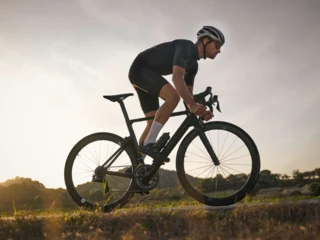
TPU technology, perfectly designed for off-road use: Lightweight, puncture-proof, low rolling resistance and the smallest pack size. AERON/TPU offers high-performance tubes for gravel and cyclocross racers as well as variants with maximum puncture protection for bikepackers and ultra-riders.

MTB SERIES
Tech for trails: AERON/TPU provides the perfect tube technology for mountain bikers with the best compromise between lightness, puncture resistance and low rolling resistance. Specific models offer you the perfect tube for your favourite mountain bike discipline, depending on your preferred terrain or riding style.
CITY/TOUR SERIES
Developed for bikers who want maximum reliability in everyday use. AERON/TPU tubes for city and touring are characterised by optimised puncture protection. Their low weight and low rolling resistance also increase performance and the fun factor on every tour.