Veröffentlicht am
INFLATING A TPU TUBE WITH CO2
Find out whether you can inflate a modern TPU tube with CO2. We provide practical tips and a detailed guide.

TPU is not a brand name or a new bicycle tube model — TPU (Thermoplastic Polyurethane) is a plastic material that a small number of manufacturers have only relatively recently begun using to produce bicycle innertubes. Until now, the typical bicycle tube was made from butyl, or butyl rubber, an elastic rubber compound. Its construction has remained virtually unchanged for decades; it was apparently the rise of tubeless technology in cycling that prompted a rethinking of inner tube manufacturing as well.
What are the practical differences between butyl tubes, TPU tubes, and tubeless tires?
The two tube materials, butyl and TPU, differ significantly. To reliably hold air and pressure and provide adequate puncture protection, butyl must be much thicker than TPU. This makes the butyl tube not only nearly threetimes heavier, but also means the packed size of a spare TPU tube is considerably smaller. The reduced weight plays a particularly important role in the area of wheels and tires. Not only is the overall weight of the bike reduced — every gram on the outer part of the rim has a negative effect on acceleration, because the combined mass of rim, rim tape, tube, and tire must not only be brought up to riding speed, but also set into rotation.
Unlike butyl, a TPU tube doesn't feel like rubber — it feels more like a thin film. TPU models also aren't necessarily black; they come in vivid colors, semi-transparent, or a technical gray like the AERON/TPU Airtubes.
The TPU material holds air very well and has proven in tests that it makes the tire more resistant to punctures, thereby increasing flat protection and ride reliability. Its thin and flexible construction also reduces the so-called rolling resistance forces in the tire — the energy lost through the constant natural deformation of the tire while riding. In addition to lowering rolling resistance, this easier adaptation to the ground surface also improves tire grip and traction, and therefore the bike's handling — though only minimally. This is especially relevant in off-road disciplines such as MTB and gravel riding.

With a tubeless tire, these riding characteristics are similarly good to marginally better, with the key difference being that no inner tube is installed at all. Specially designed rims and tires seal against each other so effectively that, as with car tires, no tube is needed. The valve is bolted directly into the rim. In addition to the high tire flexibility, this system is considered more flat-resistant because the inside can be filled with latexsealant that automatically seals small punctures. The downside of tubeless: mounting, changing, and filling the tire with latex requires more mechanical skill and tools, and the sealant can, under unfavorable circumstances, make a mess of your bike or home with the sticky liquid. Tubeless tires also need to be topped off with air more frequently, as an undamaged tubeless tire retains air less effectively than a tubed setup due to the absence ofa barrier layer. Incidentally, both tubeless tires and TPU tubes allow for lower tire pressures without risking damage — a major advantage on low-grip surfaces like gravel, sand, or wet terrain.
Bike Tubes from AERON/TPU
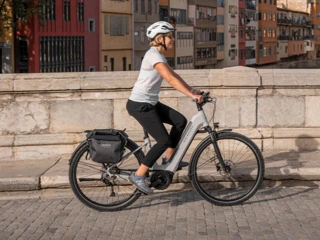
City/Tour – UltraProtect
Outstanding puncture protection for touring and daily commuting. Low weight and reduced rolling resistance increase the fun factor on every ride.

CX/Gravel – ExtraLite Protect
Perfectly tuned for athletic use beyond paved roads – lightweight, puncture-resistant, low rolling resistance, and compact packing size.

MTB – SuperLite Race AL
For mountain bike racers: ultra-light with extra-low rolling resistance. Its extremely compact packing size also makes it the perfect spare inner tube for tubeless riders.

Road – ExtraLite Protect AL
The Road ExtraLite Protect with aluminum valve stem is perfectly tuned for performance road biking – lightweight, puncture-resistant, low rolling resistance, and compact packing size.

What changes in handling, and can you inflate a TPU tube with CO2?
A TPU tube is not fundamentally used or mounted on the rim or inside the tire any differently than a butyl tube. That said, there are the following small differences in handling:
- A TPU bicycle tube cannot be patched with conventional repair kits. The vulcanizing glue included in standard kits only works on rubber. For TPU tubes, there are self-adhesive stickers (patches) or special adhesives designed for TPU patches.
- Before repairing TPU, the bonding surface must be carefully degreased with a solvent rather than roughed up as is normally done (tip: wear gloves).
- Both TPU and butyl tubes expand significantly when inflated outside of the tire. The typically elastic properties of rubber allow the butyl version to return to its original shape when deflated, whereas the more plasticnature of TPU means it would largely retain whatever unevenly stretched shape it had assumed. If, at the time of installation, its dimensions at one or more points are larger than those of the tire casing, folding inside thetire would occur. For this reason, it is important to only lightly inflate the TPU tube before placing it in the tire — do not bring it up to pressure (greater than 0.3 bar) beforehand! After the tire has been mounted, however, the TPU tube can handle just as much pressure as a conventional butyl tube.
- The size of the TPU tube should match the tire as closely as possible. With butyl, the considerably thicker material allowed for some flexibility, at least in terms of width — the tube would expand to fill tire volumes larger than its stated dimensions. A TPU tube that is too small or narrow and must significantly expand within the tire would lose even more wall thickness through this excessive stretching. The excellent material propertieswould then no longer be guaranteed.
CO2 is completely safe to use with TPU for inflating tires — just keep the handling tips listed above in mind when it comes to using and selecting your inflator.

How do you inflate a TPU tube with CO2?
When dealing with a flat and only a CO2 cartridge and inflator are available — no floor pump or mini pump — caution is advised. Some CO2-based pumps do not offer the ability to control the flow of the highlycompressed gas as it enters the tube. When the CO2 cartridge is punctured, all the gas flows through the valve into the tube at once. Such inflators are not suitable for pre-inflating a TPU tube before mounting. Even thevolume from a small 16-gram cartridge would over-inflate a TPU tube outside of the tire. In that case, it's better to pre-inflate the tube by blowing into the valve — or not at all — before inserting it.
If the CO2 pump has a precise pressure regulator, you can carefully bring the TPU tube up to its 0.3 bar before placing it in the tire. Ideal for use with TPU tubes are combination pumps that feature both a hand pump and a CO2 cartridge.
| How do CO2 pumps work? | With CO2 pumps, carbon dioxide is compressed at very high pressure into a metal cartridge. Instead of pumping, you fill the repaired tire or tube using a so-called CO2 inflator. Depending on the cartridge size and tiredimensions, one cartridge holds just enough gas for one tire, or two at most. |
| What is a CO2 inflator? | An inflator is the hardware that accepts a CO2 cartridge, opens its seal, and transfers the CO2 into the bike's valve. In between, there may be a manual shut-off valve or lever that allows you tocontrol the amount and speed of inflation — a kind of pressure regulator. |
| What is the difference between 16 and 25 gram CO2 cartridges? | The gas volume in a CO2 cartridge is measured in grams, not liters. A 16-gram cartridge is therefore filled with 16 grams of CO2, whichcorresponds to approximately 8 liters of gas at atmospheric pressure. |
| Can you screw in a CO2 cartridge, and how do I use CO2 cartridges without threads? | Either the cartridge itself is screwed into the inflator via an external thread — in which case the inflator must have a corresponding internal thread — or the cartridge has no thread, in which case an inflator with a screw-in cartridge chamber must be used. When screwing in, the cartridge is not only pressed into the device but its seal issimultaneously broken and sealed against the inflator. |
| Are CO2 cartridges standardized? | Sort of. There are different sizes with varying amounts of CO2 (12g–20g), but they differ only in length, not diameter — at least the versions with the common 3/8" UNF thread areinterchangeable. For threadless cartridges, the size must match exactly to the reservoir and holder of the specific manufacturer. Threaded and threadless systems are not compatible with each other. |
| What size — or how many — CO2 cartridges do you need to fill a tire? | The CO2 volume required varies enormously between narrow road bike tires and wide MTB tires. A 23mm narrow tire can be filled to around 7 bar with a 16-gram cartridge; a gravel bike tire gets roughly half that. A wide 29-inch tire will barely be rideable on the same cartridge — you're better off using 20 or 22 grams. One appropriately sized cartridge per repairis sufficient. |
| How long do CO2 cartridges for bikes last? | Sealed, CO2 cartridges will not lose pressure even over the course of years. Once opened, longevity depends heavily on the quality of the inflator. Both the seals at thecartridge holder and at the pressure regulator can allow CO2 to escape over days or weeks. High-quality CO2 pumps will hold pressure for several weeks. |
| Are CO2 pumps dangerous? Is the combination of a CO2 pump and a TPU tube more dangerous? | CO2 cartridges only pose a risk if they are damaged or, for example, thrown into a fire. When used carefully — including threading on screw fittings straight — accidents are extremely rare and relatively minor. As CO2 escapes, the cartridge becomes very cold, which is why it is usually wrapped or protected by a housing. Please do not touch the bare metal of the cartridge during use! CO2 and TPU work great together — there is absolutely no restriction on using CO2 pumps with the new tube material. As described, you simply need to observe themaximum pressure limits for TPU tubes when inflating outside of the tire. Also, after inflating with CO2, wait a moment before riding, as the influx of gas can cause cooling that may temporarily harden the TPU. |
Do TPU tubes fit tubeless rims?
Anyone who has converted their bike to tubeless — as the name implies — no longer needs an inner tube. The valve is screwed into the rim, the tire is mounted without an inner tube, and the system is filled with sealinglatex and air. The sealant is able to close small punctures in the tire on its own. If holes or cuts are larger, this no longer works and the sealant flows out without sealing the damage. In such cases, to continue riding, you cantry sealing the hole with a tubeless plug (tubeless "plug") or install a spare inner tube. In the latter case, the valve must be removed from the rim and the latex sealant removed as thoroughly as possible. TPU tubes are wellsuited as emergency spare tubes due to their compact size and low weight. That said, this should remain a last resort, and the remaining distance should be ridden at as low a tire pressure as possible, since the thin TPU could otherwise be pushed through the damaged area of the tire casing, damaging the newly inserted tube.
TIP: Regardless of which tube system you're running — if your tire has been inflated with CO2 after a flat, it will lose pressure comparatively quickly. For physical reasons, CO2 molecules diffuse more easily through thematerial of the tube and tire than the oxygen and nitrogen in regular air. CO2 is therefore suitable for emergency use after a flat, but not as a permanent inflation medium.
Interested in TPU bicycle tubes? Find out everything you need to know about the AERON/TPU Airtubes here.
PRODUCT SERIES
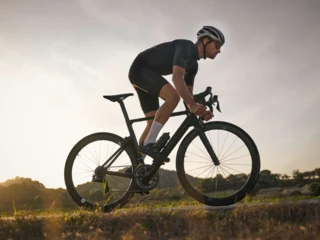
ROAD SERIES
Ultra-light, super-fast and mega-compact: AERON/TPU road bike tubes are trimmed for maximum performance. Depending on the discipline and intended use, they guarantee you the perfect set-up with a focus on maximum weight saving and minimum rolling resistance or outstanding puncture protection.
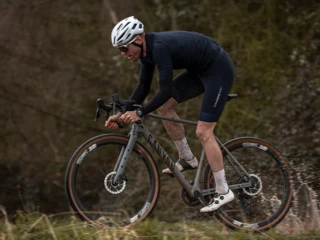
CX/GRAVEL SERIES
TPU technology, perfectly designed for off-road use: Lightweight, puncture-proof, low rolling resistance and the smallest pack size. AERON/TPU offers high-performance tubes for gravel and cyclocross racers as well as variants with maximum puncture protection for bikepackers and ultra-riders.
MTB SERIES
Tech for trails: AERON/TPU provides the perfect tube technology for mountain bikers with the best compromise between lightness, puncture resistance and low rolling resistance. Specific models offer you the perfect tube for your favourite mountain bike discipline, depending on your preferred terrain or riding style.

CITY/TOUR SERIES
Developed for bikers who want maximum reliability in everyday use. AERON/TPU tubes for city and touring are characterised by optimised puncture protection. Their low weight and low rolling resistance also increase performance and the fun factor on every tour.